
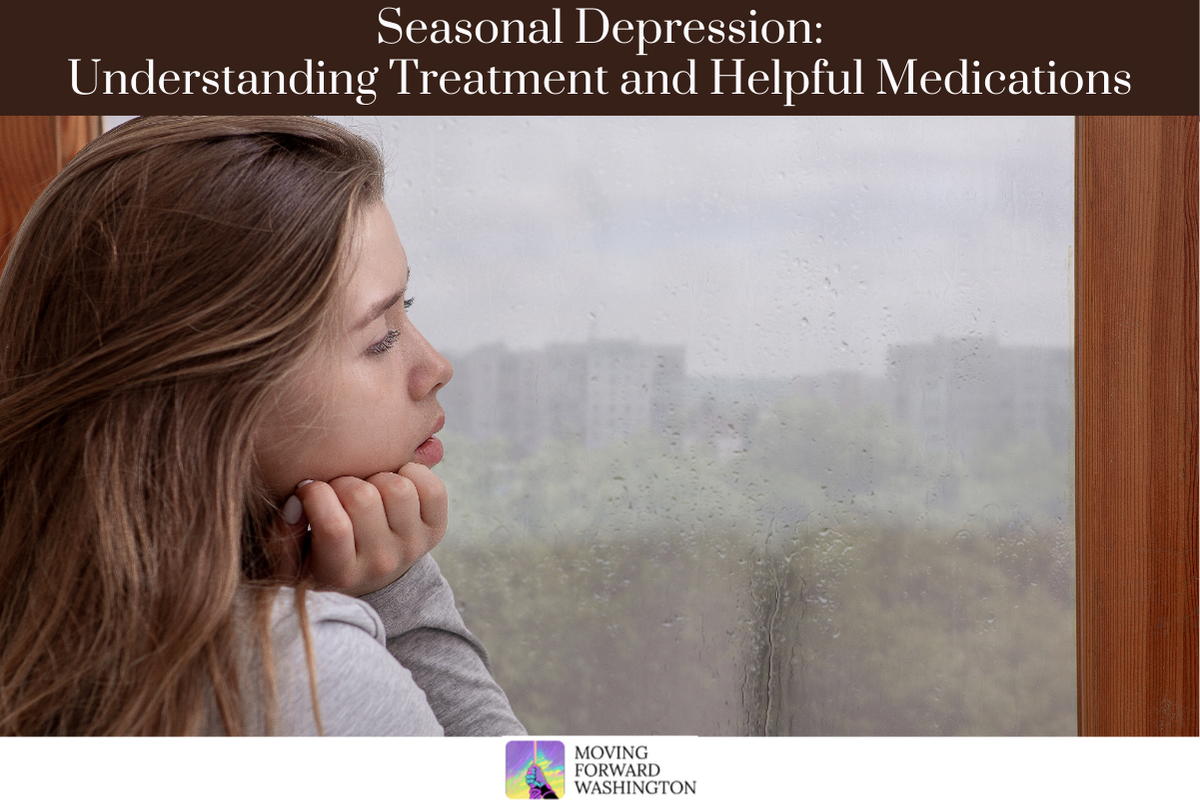
 Seasonal depression, also known as Seasonal Affective Disorder (SAD), is a type of depression that typically occurs during the fall and winter months when daylight hours are shorter. Many individuals experience changes in mood, energy levels, and sleep patterns during this time, making it difficult to function in daily life.
At Moving Forward Washington PLLC, we understand how deeply seasonal depression can impact overall well-being. Fortunately, there are effective treatments available—including lifestyle strategies, therapy, and medications—that can help restore balance and improve quality of life.
What Is Seasonal Depression?
Seasonal depression is more than just “winter blues.” It is a clinically recognized form of depression that usually begins in late fall or early winter and resolves in the spring or summer. Symptoms often include:
- Persistent sadness or low mood
- Loss of interest in enjoyable activities
- Fatigue and low energy
- Increased need for sleep or trouble sleeping
- Cravings for carbohydrates or weight changes
- Difficulty concentrating
- Feelings of hopelessness or guilt
Medications That May Help
While therapy and light exposure are key parts of treatment, medications can play an important role for individuals experiencing moderate to severe symptoms. Commonly prescribed options include:
- Selective Serotonin Reuptake Inhibitors (SSRIs): Medications such as fluoxetine (Prozac®), sertraline (Zoloft®), or escitalopram (Lexapro®) help balance serotonin levels in the brain, often improving mood and reducing symptoms of depression.
- Bupropion (Wellbutrin®): Approved specifically for seasonal depression, this medication can help increase energy levels and reduce depressive symptoms.
- Other Antidepressants: Depending on the individual’s health history and symptoms, other antidepressants may be considered.
Medication is often combined with light therapy, cognitive-behavioral therapy (CBT), and lifestyle adjustments such as physical activity, sleep hygiene, and stress management for the best outcomes.
Q&A: Seasonal Depression and Medication
Q: How do I know if I have seasonal depression?
A: If your symptoms of depression consistently appear during the fall or winter months and improve in the spring, you may have seasonal depression. A mental health professional can provide a proper evaluation and diagnosis.
Q: Do I need medication for seasonal depression?
A: Not everyone requires medication. For mild cases, light therapy, counseling, and lifestyle changes may be enough. However, if your symptoms are moderate to severe or interfere with daily functioning, medication may be recommended.
Q: Are medications safe for seasonal depression?
A: Most antidepressants are safe when prescribed and monitored by a licensed provider. Like all medications, they may have side effects, which should be discussed with your clinician to determine the best option for you.
Q: How long do I need to take medication for seasonal depression?
A: Many patients benefit from starting medication in the fall before symptoms begin and continuing through early spring. The duration will depend on your specific needs and treatment response.
Q: Can I combine medication with other treatments?
A: Yes. Medications are often most effective when used alongside light therapy, counseling, and lifestyle strategies such as regular exercise and proper sleep.
Take the Next Step
If you or someone you love struggles with seasonal depression, help is available. At Moving Forward Washington PLLC, we provide compassionate and personalized care to help you regain balance and move forward with hope.
📍 Moving Forward Washington PLLC
1721 Hewitt Avenue, Suite 506
Everett, WA 98201
📞 Phone: (425) 407-2771
🌐 Website: movingforwardwashington.com