
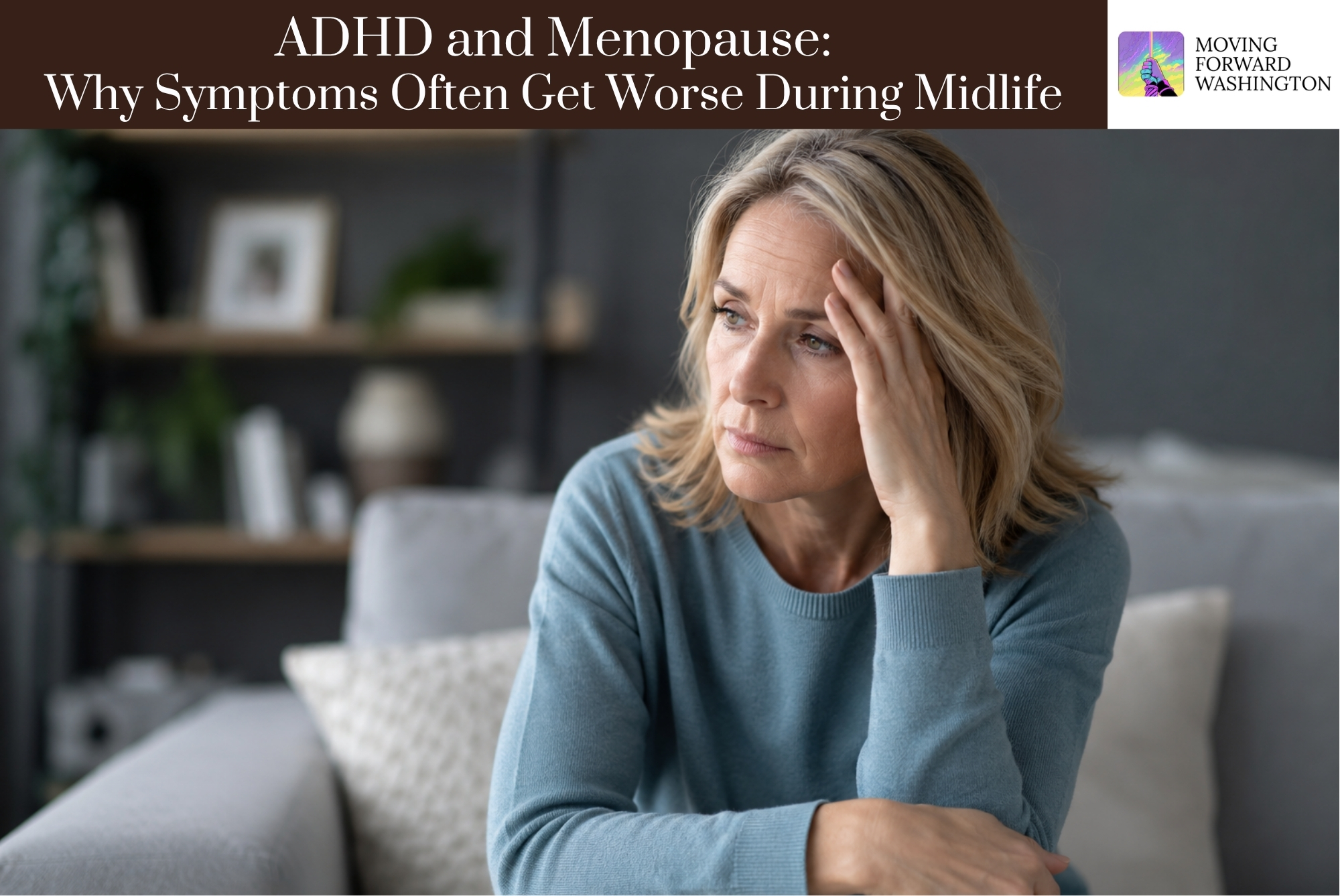
For many women, perimenopause and menopause bring noticeable changes in memory, focus, mood, and energy. While these symptoms are often attributed solely to hormonal fluctuations, there is another important factor that is frequently overlooked: Attention-Deficit/Hyperactivity Disorder (ADHD). Women with undiagnosed ADHD may find that hormonal changes make lifelong symptoms significantly more noticeable, while those already diagnosed often discover that their symptoms become much more difficult to manage during this stage of life.
The relationship between ADHD and menopause has received growing attention in medical research, helping healthcare providers better understand why many women seek psychiatric care during their 40s and 50s after years of successfully managing their responsibilities. At Moving Forward Washington PLLC, we provide comprehensive psychiatric evaluations, medication management, and psychotherapy to help women understand the connection between ADHD and menopause while developing individualized treatment plans that support long-term emotional and cognitive well-being.
Why ADHD Often Goes Undiagnosed in Women
For decades, ADHD was primarily studied in young boys who displayed hyperactive behaviors in school settings. As a result, many girls and women with ADHD were overlooked because their symptoms often present differently.
Women are more likely to experience:
Inattentiveness Rather Than Hyperactivity
Many women with ADHD struggle with concentration, organization, procrastination, forgetfulness, and mental overwhelm instead of physical hyperactivity. These symptoms can be mistaken for personality traits or simply being “busy.”
Strong Coping Strategies
Women frequently develop highly effective organizational systems, detailed calendars, reminder lists, and perfectionistic habits that compensate for ADHD symptoms for many years.
Internalized Symptoms
Rather than appearing disruptive, women often internalize their struggles, experiencing anxiety, guilt, low self-esteem, emotional exhaustion, or chronic stress from constantly working harder than others to stay organized.
Because these coping mechanisms can mask ADHD, many women remain undiagnosed until hormonal changes reduce their ability to compensate.
How Hormones Affect ADHD Symptoms
Hormones play a significant role in brain function. Estrogen helps regulate dopamine, norepinephrine, and serotonin—neurotransmitters that influence attention, executive functioning, motivation, and emotional regulation.
As estrogen levels fluctuate during perimenopause and decline during menopause, these neurotransmitter systems become less efficient, often making ADHD symptoms more noticeable or more severe.
Many women report that strategies that worked well for decades suddenly stop working.
Understanding Perimenopause
Perimenopause is the transition leading up to menopause and often begins during a woman’s 40s, although it may start earlier for some individuals.
During perimenopause, hormone levels fluctuate unpredictably, leading to symptoms that may include:
- Irregular menstrual cycles
- Hot flashes
- Night sweats
- Sleep disturbances
- Mood swings
- Fatigue
- Memory problems
- Difficulty concentrating
- Increased anxiety
These symptoms frequently overlap with ADHD, making diagnosis more challenging.
How Menopause Can Worsen ADHD Symptoms
As estrogen declines, women with ADHD often experience increased executive functioning difficulties.
Common symptoms include:
Brain Fog
Many women describe feeling mentally “foggy,” struggling to process information as quickly as they once did. Conversations, meetings, and multitasking may become significantly more difficult.
Forgetfulness
Forgetting appointments, misplacing items, losing track of conversations, or struggling to recall familiar information becomes increasingly common.
Difficulty Concentrating
Reading lengthy documents, completing projects, or maintaining attention during meetings may require much greater effort.
Poor Organization
Tasks that once felt manageable may suddenly become overwhelming, resulting in unfinished projects, clutter, or missed deadlines.
Increased Emotional Dysregulation
Women may notice:
- Increased irritability
- Lower frustration tolerance
- Emotional sensitivity
- Feeling overwhelmed by small stressors
- Greater difficulty managing conflict
Reduced Motivation
Declining dopamine activity can make it harder to initiate tasks, prioritize responsibilities, or complete daily activities.
Why ADHD Is Often Mistaken for Menopause
Because many symptoms overlap, women are often told they are simply experiencing menopause.
Both conditions can cause:
- Memory problems
- Brain fog
- Trouble concentrating
- Mood changes
- Fatigue
- Sleep disruption
- Anxiety
- Reduced productivity
Without a thorough psychiatric evaluation, underlying ADHD may remain undiagnosed.
Signs That ADHD May Be Contributing
Certain clues suggest that ADHD has been present long before menopause.
These include a lifelong history of:
Chronic Disorganization
Consistently struggling with organization despite strong effort.
Difficulty Completing Projects
Starting multiple projects with enthusiasm but having difficulty finishing them.
Forgetfulness Since Childhood
Frequently losing belongings, forgetting homework, or missing deadlines throughout life.
Time Management Problems
Running late, underestimating task duration, or feeling constantly rushed.
Emotional Sensitivity
Experiencing intense emotional reactions or difficulty regulating frustration throughout adulthood.
Family History
ADHD often runs in families, making family history an important part of the evaluation.
The Emotional Impact
Many women incorrectly believe they are “losing their minds” during menopause.
Years of increased forgetfulness, decreased productivity, and emotional overwhelm can contribute to:
- Anxiety disorders
- Depression
- Low self-confidence
- Burnout
- Relationship difficulties
- Occupational stress
Receiving an accurate diagnosis often provides tremendous relief and validation.
Comprehensive Evaluation Matters
Diagnosing ADHD during menopause requires more than reviewing current symptoms.
A psychiatric provider considers:
Developmental History
ADHD symptoms typically begin in childhood, even if they were never recognized.
Medical Evaluation
Medical conditions such as thyroid disorders, sleep disorders, vitamin deficiencies, medication side effects, and neurological conditions should be considered when appropriate.
Hormonal Changes
Understanding the timing of symptom changes helps determine how menopause may be influencing ADHD.
Mental Health Assessment
Conditions including anxiety, depression, trauma-related disorders, and mood disorders frequently occur alongside ADHD and should also be evaluated.
Treatment Options for ADHD During Menopause
Treatment should be individualized based on each woman’s symptoms, medical history, and overall health.
Psychiatric Medication Management
Medication remains one of the most effective treatments for ADHD.
Depending on individual needs, psychiatric providers may recommend:
- Stimulant medications
- Non-stimulant ADHD medications
- Adjustments to existing medications
- Treatment for coexisting anxiety or depression when appropriate
Medication management includes regular follow-up visits to evaluate effectiveness, monitor side effects, and make adjustments as needed.
Psychotherapy
Therapy provides practical tools that complement medication.
Women often benefit from learning strategies for:
- Organization
- Time management
- Emotional regulation
- Stress reduction
- Self-compassion
- Managing perfectionism
- Building healthier routines
Cognitive behavioral therapy (CBT) and other evidence-based therapeutic approaches can help individuals develop skills that improve daily functioning and overall quality of life.
Lifestyle Modifications
Healthy lifestyle habits support brain function and symptom management.
Helpful strategies include:
- Consistent sleep routines
- Regular physical activity
- Balanced nutrition
- Mindfulness practices
- Stress management techniques
- Structured daily schedules
- Using planners and digital reminders
Collaborative Care
Some women benefit from coordinated care between psychiatric providers, primary care physicians, gynecologists, and other healthcare professionals to address both hormonal and mental health concerns.
Why Early Treatment Matters
Untreated ADHD symptoms during menopause can affect nearly every aspect of daily life.
Appropriate treatment can help improve:
- Concentration
- Productivity
- Emotional stability
- Confidence
- Relationships
- Workplace performance
- Daily organization
- Overall quality of life
Many women experience significant improvement after receiving an accurate diagnosis and individualized treatment plan.
You Don’t Have to Navigate This Alone
If you have noticed worsening attention problems, forgetfulness, brain fog, or emotional changes during perimenopause or menopause, it is worth discussing these symptoms with a qualified psychiatric provider. Many women discover that ADHD has contributed to lifelong challenges that only became more noticeable during hormonal changes.
A comprehensive psychiatric evaluation can help identify the underlying causes of your symptoms and guide personalized treatment. Whether ADHD is newly diagnosed or previously identified, evidence-based medication management and psychotherapy can help women regain confidence, improve focus, and better manage the transitions associated with midlife.
Frequently Asked Questions
Can menopause cause ADHD?
No. Menopause does not cause ADHD. However, hormonal changes during perimenopause and menopause can worsen existing ADHD symptoms or make previously unrecognized symptoms more noticeable.
Why do ADHD symptoms become worse during menopause?
Declining estrogen levels affect dopamine and other neurotransmitters involved in attention, executive functioning, and emotional regulation. This can make ADHD symptoms more difficult to manage.
Can someone be diagnosed with ADHD later in life?
Yes. Many women receive their first ADHD diagnosis during their 40s, 50s, or even later after hormonal changes reveal lifelong symptoms that were previously masked by coping strategies.
Is brain fog always a sign of ADHD?
No. Brain fog can result from menopause, stress, sleep disorders, thyroid conditions, depression, anxiety, medication side effects, and other medical conditions. A comprehensive evaluation helps determine the underlying cause.
How is ADHD diagnosed in adult women?
Diagnosis includes a detailed clinical interview, review of childhood and adult symptoms, medical and mental health history, assessment of current functioning, and evaluation for other conditions that may contribute to similar symptoms.
Can medication still help during menopause?
Yes. Many women benefit from psychiatric medication management. Your provider will recommend the most appropriate treatment based on your symptoms, medical history, and treatment goals.
Does psychotherapy help ADHD?
Yes. Evidence-based psychotherapy can improve organization, emotional regulation, stress management, self-esteem, and executive functioning while complementing medication management.
Should I see a psychiatrist if I’m experiencing brain fog and forgetfulness?
If these symptoms are interfering with your work, relationships, or daily functioning, a psychiatric evaluation can help determine whether ADHD, anxiety, depression, hormonal changes, or another condition is contributing to your symptoms.
Can ADHD and anxiety occur together?
Yes. ADHD and anxiety commonly coexist. Identifying and treating both conditions often leads to better symptom control and improved quality of life.
When should I seek professional help?
You should seek evaluation if attention problems, memory concerns, emotional changes, or executive functioning difficulties are persistent, worsening, or affecting your ability to function at home, work, or in relationships.
Contact Information
Moving Forward Washington PLLC
1721 Hewitt Avenue, Suite 506
Everett, WA 98201
Phone: (425) 655-7335
Website: movingforwardwashington.com