
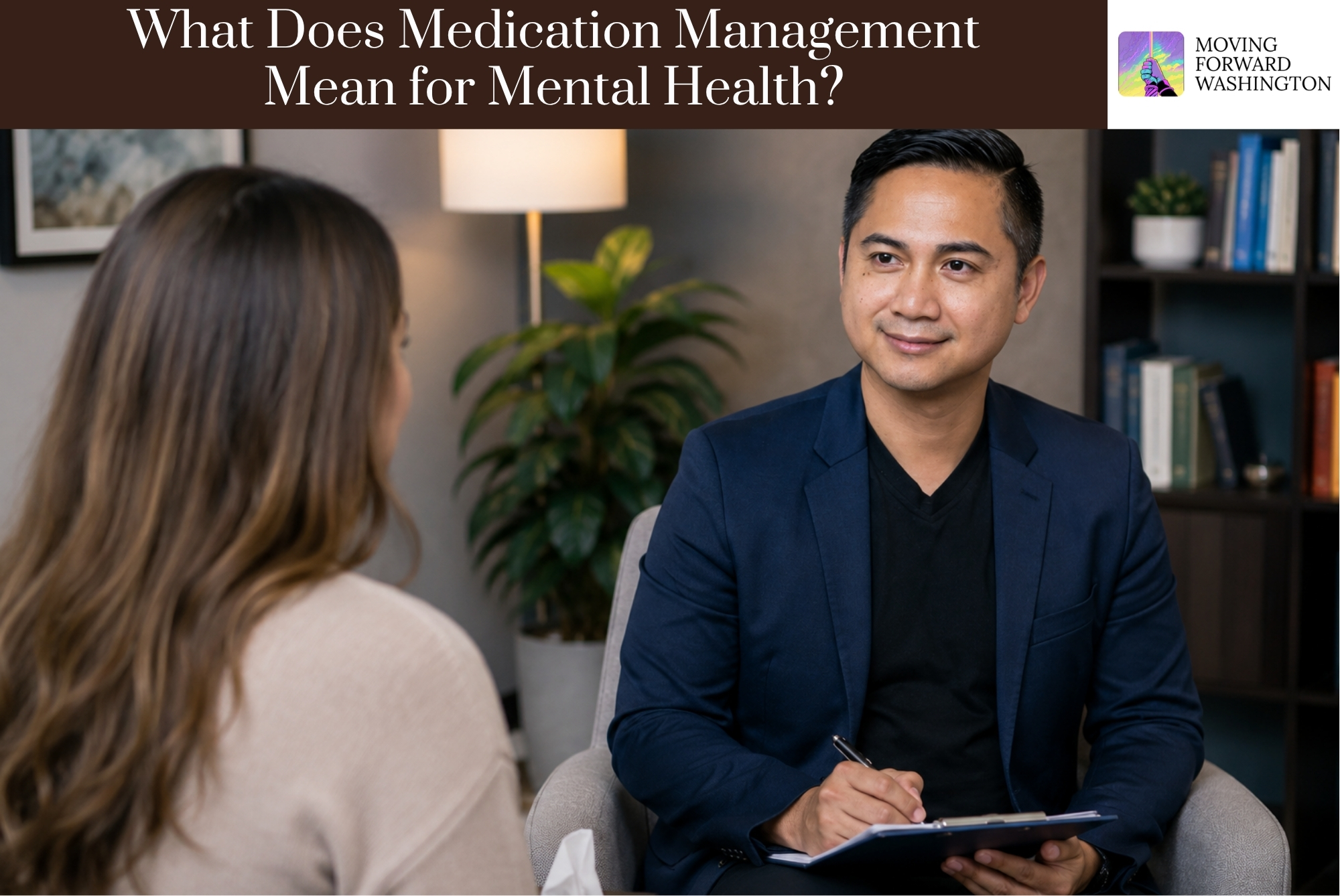
 Mental health treatment is not one-size-fits-all. While therapy plays a critical role in helping individuals develop coping skills, process emotions, and improve daily functioning, some mental health conditions also benefit from carefully prescribed psychiatric medication. Medication management is the ongoing process of ensuring that mental health medications are safe, effective, and appropriately adjusted as a person’s needs change over time.
At Moving Forward Washington PLLC, medication management is a collaborative process designed to support each patient’s overall mental wellness. Rather than simply prescribing medication, psychiatric providers continually evaluate how treatment is working, monitor for side effects, answer questions, and make evidence-based adjustments when needed. The goal is always to help patients achieve the greatest improvement in symptoms while minimizing unwanted effects and maximizing quality of life.
Whether you are considering psychiatric medication for the first time or have been taking medication for years, understanding how medication management works can help you feel more informed and confident in your treatment journey.
What Is Medication Management?
Medication management is an ongoing medical service provided by qualified psychiatric professionals to evaluate, prescribe, monitor, and adjust medications used to treat mental health conditions.
Unlike receiving a prescription during a single visit, medication management involves regular follow-up appointments to assess how well medications are working and whether any changes are needed.
Medication management may include:
- Comprehensive psychiatric evaluations
- Medication recommendations
- Prescription management
- Monitoring treatment effectiveness
- Managing side effects
- Adjusting dosages
- Changing medications when appropriate
- Reviewing medication interactions
- Monitoring physical health concerns related to treatment
- Coordinating care with therapists and primary care providers when appropriate
This personalized approach helps ensure that treatment remains safe and aligned with each patient’s changing needs.
Why Medication Management Is Important
Mental health medications affect brain chemistry, and every individual responds differently. What works well for one person may not work the same way for another.
Careful medication management helps providers determine:
- Whether symptoms are improving
- If medication dosages are appropriate
- Whether side effects require intervention
- If another medication may be more effective
- Whether medications should be continued, adjusted, or discontinued
- How treatment fits within a patient’s overall health plan
Regular monitoring also improves medication adherence and helps patients feel supported throughout their treatment.
Conditions That May Benefit from Psychiatric Medication
Psychiatric medication may be recommended as part of treatment for numerous mental health conditions, including:
Depression
Antidepressant medications can help improve mood, energy, concentration, motivation, sleep, and overall functioning when clinically appropriate.
Anxiety Disorders
Medication may help reduce excessive worry, panic attacks, generalized anxiety, social anxiety, or obsessive thoughts while patients continue developing coping strategies through therapy.
Bipolar Disorder
Mood stabilizers and other psychiatric medications help reduce episodes of depression and mania while supporting long-term emotional stability.
Attention-Deficit/Hyperactivity Disorder (ADHD)
Stimulant and non-stimulant medications can improve focus, attention, organization, and impulse control in many patients.
Post-Traumatic Stress Disorder (PTSD)
Medication may help reduce anxiety, hypervigilance, nightmares, and depressive symptoms associated with trauma.
Obsessive-Compulsive Disorder (OCD)
Certain medications can reduce intrusive thoughts and compulsive behaviors when combined with evidence-based psychotherapy.
Other Mental Health Conditions
Medication management may also support individuals living with panic disorder, mood disorders, psychotic disorders, insomnia related to psychiatric conditions, and other behavioral health concerns.
What Happens During an Initial Medication Management Appointment?
The first appointment is significantly more comprehensive than a routine follow-up visit.
Your psychiatric nurse practitioner will take time to understand your complete medical and mental health history before recommending treatment.
Topics commonly discussed include:
Mental Health Symptoms
Your provider will ask about current symptoms, when they began, how severe they are, and how they affect work, school, relationships, and daily life.
Medical History
Physical health conditions can influence psychiatric medication choices. Providers review medical diagnoses, allergies, previous treatments, surgeries, and current medications.
Previous Mental Health Treatment
Patients are asked about prior therapy, psychiatric medications, hospitalizations, and previous responses to treatment.
Family History
Some mental health conditions and medication responses can have hereditary patterns that help guide treatment decisions.
Lifestyle Factors
Sleep, nutrition, exercise, alcohol use, substance use, stress, and work-life balance all contribute to mental wellness and influence treatment planning.
Treatment Goals
Medication management is individualized. Patients and providers discuss goals such as reducing anxiety, improving sleep, increasing concentration, stabilizing mood, or improving overall functioning.
How Psychiatric Medications Are Selected
Choosing psychiatric medication involves far more than matching symptoms to a prescription.
Providers consider numerous factors, including:
- Diagnosis
- Symptom severity
- Age
- Medical history
- Current medications
- Pregnancy considerations
- Potential medication interactions
- Previous medication experiences
- Family history of medication response
- Lifestyle
- Individual treatment goals
This personalized approach supports safer, more effective treatment decisions.
What Happens During Follow-Up Visits?
Medication management continues well after the initial prescription.
Regular follow-up appointments allow providers to evaluate progress and make adjustments as needed.
During follow-up visits, providers typically discuss:
Symptom Improvement
Has anxiety decreased? Is depression lifting? Has concentration improved? Are panic attacks less frequent?
Side Effects
Some medications cause temporary side effects that improve over time, while others require dosage adjustments or medication changes.
Medication Adherence
Providers discuss whether medications are being taken consistently and address any concerns that may interfere with treatment.
Sleep and Daily Functioning
Changes in sleep, appetite, work performance, school success, and relationships provide valuable insight into treatment effectiveness.
Medication Adjustments
Dosages may be increased, decreased, maintained, or medications changed depending on clinical response.
Why Medication Adjustments Are Sometimes Necessary
Finding the right psychiatric medication is often a process rather than an immediate solution.
Medication adjustments may occur because:
- Symptoms have improved and maintenance treatment is appropriate.
- Symptoms persist despite treatment.
- Side effects become problematic.
- New health conditions develop.
- Other medications create interactions.
- Life changes alter treatment needs.
- Pregnancy or aging affects medication choices.
Adjustments are made carefully and based on ongoing clinical assessment.
Patient Safety Is Always the Priority
Medication management places patient safety at the center of every decision.
Psychiatric providers monitor for:
- Medication interactions
- Allergic reactions
- Blood pressure changes
- Weight changes
- Sleep disturbances
- Mood changes
- Increased anxiety
- Suicidal thoughts or worsening depression
- Laboratory monitoring when certain medications require it
Patients should never stop psychiatric medications abruptly without discussing changes with their prescribing provider, as doing so can increase the risk of withdrawal symptoms or symptom recurrence.
The Role of Psychiatric Nurse Practitioners
Psychiatric Mental Health Nurse Practitioners (PMHNPs) are advanced practice providers specially trained to diagnose mental health conditions, prescribe medications, monitor treatment, and provide ongoing psychiatric care.
Their education combines advanced nursing knowledge with specialized psychiatric training, allowing them to deliver comprehensive, patient-centered care across a wide range of mental health conditions.
PMHNPs work collaboratively with patients to create individualized treatment plans that prioritize safety, symptom improvement, and long-term wellness.
Why Medication Alone Is Not Always Enough
Although psychiatric medication can significantly improve symptoms, the strongest long-term outcomes often occur when medication is combined with psychotherapy.
Therapy helps patients:
- Develop healthy coping skills
- Learn emotional regulation techniques
- Address underlying trauma
- Improve relationships
- Reduce stress
- Build resilience
- Prevent relapse
Medication and therapy often complement one another by addressing both biological and psychological aspects of mental health.
Building a Long-Term Treatment Plan
Medication management is not simply about taking medication indefinitely. Treatment plans evolve over time based on each person’s progress.
Some patients benefit from medication for shorter periods during particularly difficult times, while others require long-term treatment for chronic mental health conditions.
Regular follow-up visits allow providers to evaluate whether treatment goals are being met and whether adjustments remain appropriate.
A collaborative relationship between provider and patient helps create a treatment plan that supports long-term emotional health, stability, and improved quality of life.
Frequently Asked Questions
What is medication management in mental health?
Medication management is the ongoing process of prescribing, monitoring, adjusting, and evaluating psychiatric medications to ensure they remain safe and effective while supporting each patient’s treatment goals.
How often are medication management appointments?
Appointment frequency varies depending on the individual, diagnosis, and stage of treatment. New patients often have more frequent follow-up visits until medications are stabilized, while established patients may have appointments at longer intervals based on clinical need.
Will I receive medication during my first appointment?
Not every patient requires medication. Following a comprehensive psychiatric evaluation, your provider will determine whether medication is appropriate and discuss the benefits, potential risks, and available treatment options before developing a personalized care plan.
How long does it take psychiatric medication to work?
Many psychiatric medications require several weeks before reaching their full therapeutic effect. Some medications work more quickly, while others need gradual dosage adjustments over time. Your provider will monitor your progress during follow-up visits.
What if my medication causes side effects?
Many side effects improve as your body adjusts to treatment. If side effects are bothersome or persistent, your provider may recommend dosage adjustments, medication changes, or other strategies to improve tolerability.
Can I stop taking psychiatric medication once I feel better?
Do not stop taking psychiatric medication without consulting your prescribing provider. Suddenly discontinuing medication can lead to withdrawal symptoms or a return of mental health symptoms. Your provider can develop a safe tapering plan if discontinuation is appropriate.
Do I still need therapy if I take medication?
Many patients benefit most from combining medication management with psychotherapy. Medication can help reduce symptoms, while therapy provides practical skills for managing stress, improving relationships, and maintaining long-term emotional wellness.
Are psychiatric medications addictive?
Most commonly prescribed antidepressants, mood stabilizers, and many other psychiatric medications are not considered addictive. However, some medications have specific risks or require careful monitoring. Your provider will explain the benefits and potential risks of any medication prescribed.
How does a psychiatric nurse practitioner decide which medication is right for me?
A psychiatric nurse practitioner considers your diagnosis, symptoms, medical history, current medications, family history, treatment goals, and lifestyle before recommending a medication that best fits your individual needs.
Contact Information
Moving Forward Washington PLLC
1721 Hewitt Avenue, Suite 506
Everett, WA 98201
Phone: (425) 655-7335
Website: movingforwardwashington.com