
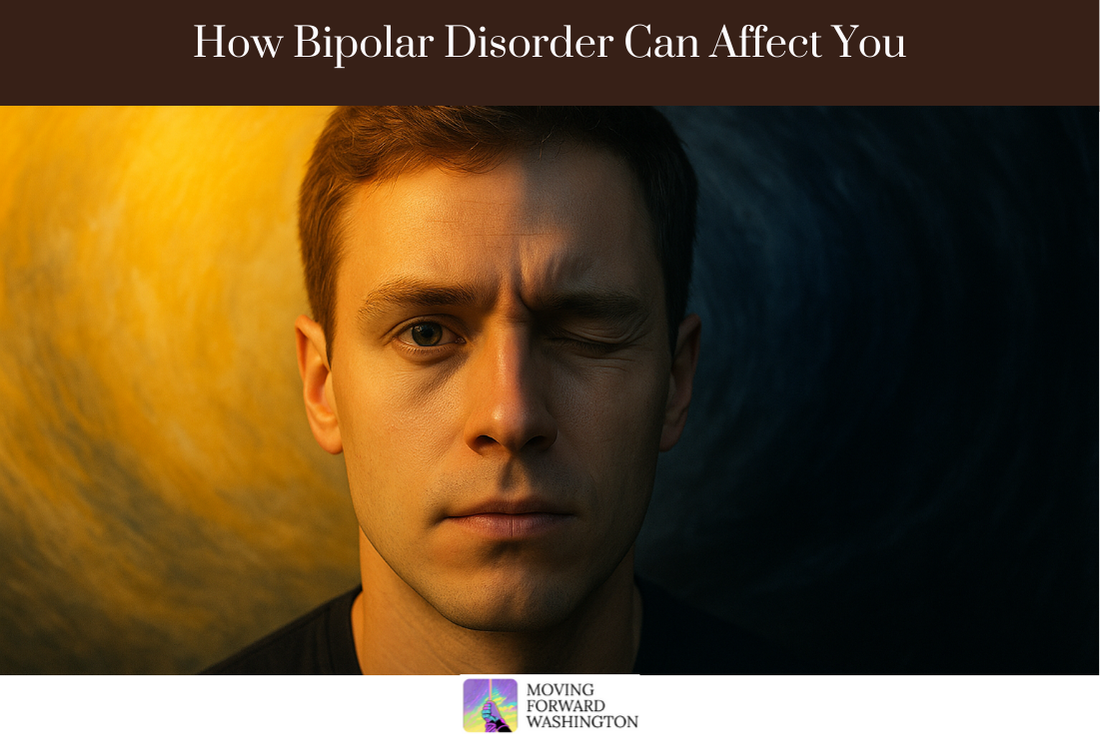
Bipolar disorder is a complex mental health condition that affects mood, energy, and daily functioning. People with bipolar disorder experience intense emotional states, ranging from manic or hypomanic episodes (characterized by elevated mood, increased energy, impulsivity, and decreased need for sleep) to depressive episodes (marked by sadness, hopelessness, fatigue, and difficulty concentrating).
These shifts can be disruptive to relationships, work, and overall quality of life. However, with proper treatment—including therapy, medication, and lifestyle strategies—many people living with bipolar disorder are able to manage symptoms and lead fulfilling lives.
The Impact of Bipolar Disorder
- Emotional Well-Being: The swings between mania and depression can feel overwhelming, leading to distress and confusion.
- Relationships: Sudden mood changes can strain family, friendships, and romantic partnerships.
- Work and School: Energy fluctuations may cause challenges with focus, attendance, or performance.
- Physical Health: Irregular sleep patterns, high stress, and poor lifestyle habits during episodes can affect long-term physical health.
- Self-Esteem: Living with a chronic condition may contribute to shame or stigma, making it harder to seek help.
Treatment and Support
At Moving Forward Washington PLLC, we provide compassionate, evidence-based care tailored to each individual. Treatment may involve:
- Medication Management – Mood stabilizers, antipsychotics, or antidepressants (when appropriate).
- Therapy – Cognitive behavioral therapy (CBT), psychoeducation, and supportive counseling.
- Lifestyle Support – Guidance on sleep, stress reduction, and routines.
- Family Involvement – Helping loved ones understand the condition and improve communication.
Q&A: Bipolar Disorder
Q: What causes bipolar disorder?
A: The exact cause isn’t fully known, but it is linked to genetic factors, brain chemistry, and environmental stressors.
Q: Can bipolar disorder be cured?
A: Bipolar disorder is a lifelong condition, but with the right treatment plan, symptoms can be managed effectively.
Q: What are early warning signs of mania?
A: Decreased need for sleep, racing thoughts, talking quickly, impulsive decisions, and heightened energy may signal the start of a manic episode.
Q: How can family and friends help?
A: By learning about the disorder, offering nonjudgmental support, helping track symptoms, and encouraging treatment adherence.
Q: Is it possible to live a normal life with bipolar disorder?
A: Yes. Many individuals with bipolar disorder thrive when they have consistent treatment, healthy habits, and a supportive network.
Take the Next Step
If you or a loved one is struggling with bipolar disorder, know that help is available. At Moving Forward Washington PLLC, we are committed to guiding patients toward stability, wellness, and resilience.
📍 Moving Forward Washington PLLC
1721 Hewitt Avenue, Suite 506
Everett, WA 98201
📞 Phone: (425) 407-2771
🌐 Website: movingforwardwashington.com