
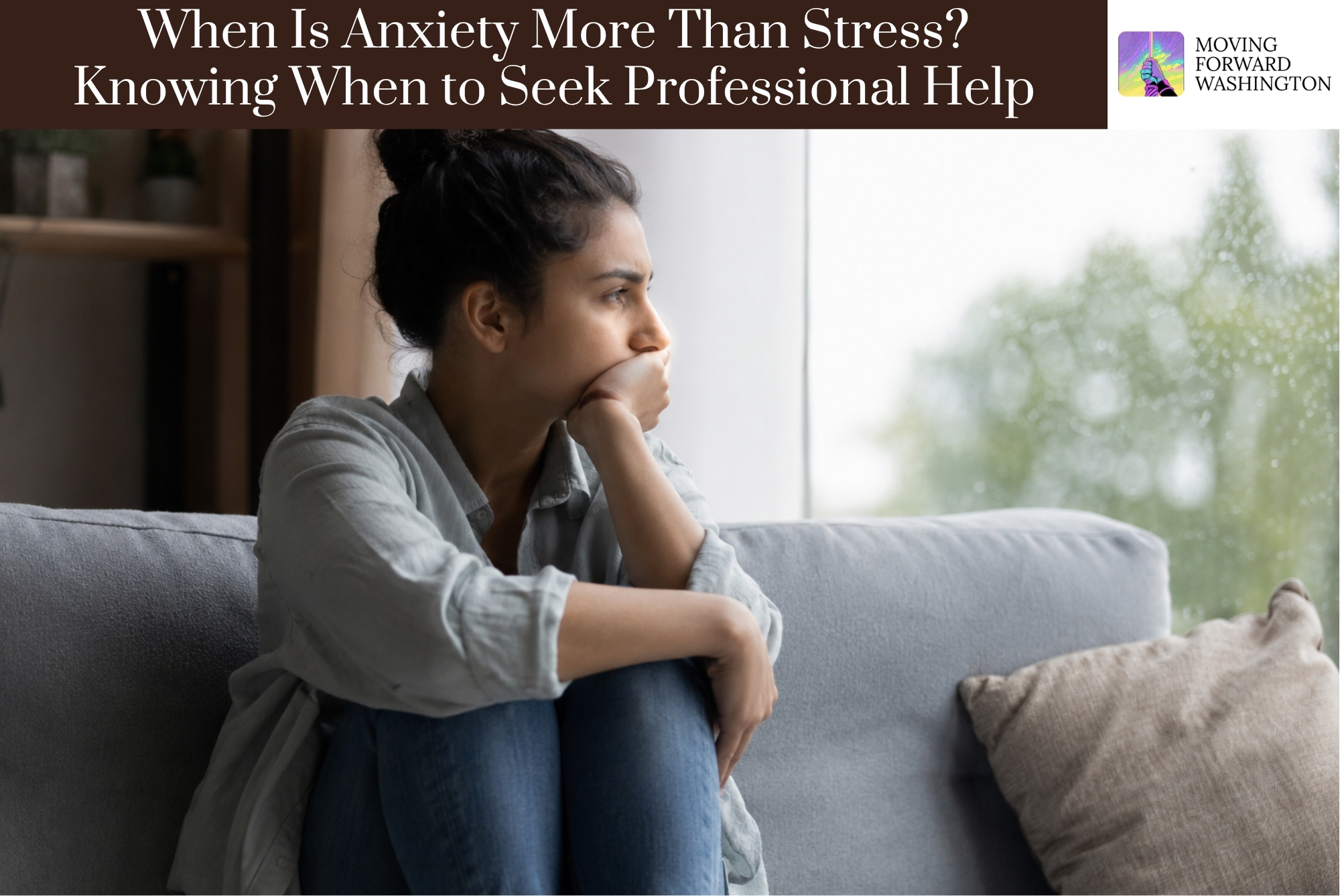
 Stress is a normal part of life. Deadlines at work, family responsibilities, financial concerns, health issues, and unexpected life changes can all trigger temporary feelings of worry or tension. In many cases, those feelings improve once the stressful situation has passed.
Anxiety is different. While everyone experiences anxiety from time to time, persistent anxiety that interferes with daily life may be a sign of an anxiety disorder that benefits from professional evaluation and treatment. Understanding the difference between everyday stress and chronic anxiety can help you recognize when it’s time to seek support.
At Moving Forward Washington PLLC, compassionate mental health providers help individuals throughout Washington understand their symptoms, identify effective treatment options, and develop personalized plans to improve emotional well-being and quality of life.
Understanding the Difference Between Stress and Anxiety
What Is Everyday Stress?
Stress is the body’s natural response to external demands or challenges. It activates the “fight-or-flight” response, increasing alertness and preparing the body to respond to a perceived threat.
Common sources of stress include:
- Work deadlines
- School responsibilities
- Parenting challenges
- Financial concerns
- Relationship conflicts
- Moving or major life transitions
- Medical issues
Stress symptoms often include:
- Temporary nervousness
- Muscle tension
- Headaches
- Fatigue
- Difficulty sleeping
- Irritability
- Trouble concentrating
For most people, these symptoms improve once the stressful situation resolves.
What Is Anxiety?
Anxiety involves persistent worry or fear that continues even when there is no immediate danger or stressful event. Anxiety disorders can affect thoughts, emotions, physical health, and behavior.
Rather than being tied to a single stressful event, anxiety often becomes chronic and can interfere with work, relationships, education, and everyday activities.
Professional anxiety treatment focuses on identifying underlying causes while helping patients develop healthier coping strategies and symptom management techniques.
Signs That Anxiety May Be More Than Everyday Stress
Persistent Worry
One of the hallmark signs of an anxiety disorder is excessive worrying that feels difficult or impossible to control.
You may constantly worry about:
- Health
- Finances
- Family
- Work performance
- Social situations
- Future events
- Everyday responsibilities
The level of worry is often much greater than the actual situation warrants.
Symptoms Last for Months
Stress usually improves after circumstances change.
Anxiety disorders often involve symptoms that persist for six months or longer and continue despite changes in life circumstances.
Anxiety Interferes with Daily Life
Professional help should be considered when anxiety begins affecting:
- Job performance
- Academic success
- Relationships
- Parenting
- Sleep
- Physical health
- Social activities
- Personal goals
Many people begin avoiding situations that trigger anxiety, which can gradually make symptoms more severe.
Physical Symptoms of Anxiety
Anxiety Is Both Emotional and Physical
Anxiety affects the entire body, not just the mind.
Physical symptoms may include:
- Rapid heartbeat
- Chest tightness
- Sweating
- Trembling
- Shortness of breath
- Dizziness
- Nausea
- Upset stomach
- Muscle tension
- Frequent headaches
- Fatigue
- Difficulty sleeping
Because anxiety can produce symptoms similar to medical conditions, a thorough evaluation helps determine the appropriate diagnosis and treatment plan.
Emotional and Cognitive Warning Signs
Anxiety Changes the Way You Think
Chronic anxiety often affects thought patterns, making it difficult to focus or feel mentally at ease.
Common emotional symptoms include:
- Constant fear
- Feeling overwhelmed
- Irritability
- Restlessness
- Difficulty relaxing
- Racing thoughts
- Trouble concentrating
- Feeling “on edge”
- Excessive self-doubt
- Catastrophic thinking
These symptoms can gradually become more disruptive if left untreated.
Behavioral Changes Caused by Anxiety
Avoidance Becomes Common
Many people with anxiety begin avoiding situations that trigger uncomfortable emotions.
Examples include:
- Avoiding social events
- Calling out of work
- Missing school
- Avoiding driving
- Declining invitations
- Putting off important decisions
- Avoiding medical appointments
- Isolating from friends and family
Although avoidance may provide temporary relief, it often reinforces anxiety over time.
Common Anxiety Disorders
Generalized Anxiety Disorder (GAD)
Generalized Anxiety Disorder involves excessive, ongoing worry about multiple aspects of daily life.
Symptoms often include:
- Constant worry
- Fatigue
- Difficulty concentrating
- Muscle tension
- Sleep problems
- Irritability
Panic Disorder
Panic disorder involves unexpected panic attacks that may include:
- Racing heart
- Chest pain
- Difficulty breathing
- Sweating
- Shaking
- Fear of dying
- Fear of losing control
Many individuals begin avoiding places where panic attacks have occurred.
Social Anxiety Disorder
Social anxiety involves intense fear of being judged or embarrassed during social interactions.
People may avoid:
- Public speaking
- Work meetings
- Eating in public
- Social gatherings
- Dating
- Classroom participation
Specific Phobias
Phobias involve intense fear related to particular situations or objects such as:
- Flying
- Heights
- Needles
- Animals
- Storms
- Elevators
Risk Factors for Anxiety Disorders
Several Factors May Increase Risk
Although anyone can develop anxiety, certain factors increase the likelihood, including:
- Family history of anxiety disorders
- Chronic medical conditions
- Major life changes
- Trauma
- Childhood adversity
- High-stress occupations
- Substance use
- Other mental health conditions
Understanding these risk factors helps providers create individualized treatment plans.
How Anxiety Is Diagnosed
Comprehensive Mental Health Evaluation
An experienced mental health provider performs a thorough assessment that may include:
- Medical history
- Mental health history
- Current symptoms
- Symptom duration
- Stressors
- Family history
- Medication review
- Lifestyle factors
The goal is to identify the specific anxiety disorder, rule out other conditions, and develop the most appropriate treatment approach.
Effective Anxiety Treatment Options
Psychotherapy
Psychotherapy is one of the most effective treatments for anxiety disorders.
Evidence-based therapies help individuals:
- Identify unhealthy thinking patterns
- Build coping skills
- Reduce avoidance behaviors
- Improve emotional regulation
- Increase confidence
- Learn relaxation techniques
- Develop healthier responses to stress
Cognitive Behavioral Therapy (CBT) is one of the most well-researched and effective therapies for anxiety disorders.
Medication Management
For some individuals, medication can significantly reduce anxiety symptoms.
Depending on the diagnosis and medical history, treatment may include:
- Selective serotonin reuptake inhibitors (SSRIs)
- Serotonin-norepinephrine reuptake inhibitors (SNRIs)
- Other evidence-based medications when clinically appropriate
Medication management involves careful monitoring to maximize benefits while minimizing side effects. Treatment decisions are individualized based on each patient’s needs, symptoms, and overall health.
Lifestyle Changes That Support Recovery
Professional treatment often works best alongside healthy daily habits.
Helpful strategies include:
- Regular physical activity
- Consistent sleep schedules
- Balanced nutrition
- Mindfulness practices
- Deep breathing exercises
- Limiting caffeine and alcohol
- Maintaining supportive relationships
- Stress management techniques
These habits complement psychotherapy and medication but are not substitutes for professional care when anxiety becomes persistent.
When You Should Seek Professional Help
Signs It’s Time to Reach Out
Consider scheduling an evaluation if:
- Anxiety lasts for several months
- Worry feels uncontrollable
- Anxiety interferes with work or school
- Relationships are suffering
- You avoid everyday activities
- Sleep problems persist
- Physical symptoms continue without another medical explanation
- Panic attacks occur
- Self-help strategies no longer provide relief
Seeking treatment early often leads to better outcomes and can prevent symptoms from becoming more severe over time.
Anxiety Is Treatable
Recovery Is Possible
Many people mistakenly believe they simply have to “live with anxiety.”
In reality, anxiety disorders are highly treatable. With evidence-based psychotherapy, medication management when appropriate, and personalized support, many individuals experience significant improvements in their symptoms, relationships, work performance, and overall quality of life.
If anxiety is affecting your daily life, reaching out to a qualified mental health provider is an important step toward feeling better and moving forward with greater confidence.
Frequently Asked Questions
What is the difference between stress and anxiety?
Stress is typically a response to an identifiable situation and usually improves once the challenge passes. Anxiety often persists even without an immediate stressor and can interfere with daily functioning.
How do I know if I need anxiety treatment?
If worry feels constant, symptoms last for several months, interfere with work, school, relationships, or sleep, or lead you to avoid normal activities, it is a good time to seek a professional evaluation.
Can anxiety cause physical symptoms?
Yes. Anxiety commonly causes physical symptoms including rapid heartbeat, muscle tension, headaches, stomach discomfort, dizziness, fatigue, sweating, and difficulty sleeping.
What type of therapist treats anxiety?
Licensed mental health professionals who provide evidence-based psychotherapy, such as Cognitive Behavioral Therapy (CBT), are commonly trained to treat anxiety disorders. Some providers also offer medication management or collaborate with prescribing clinicians.
Is medication necessary for anxiety?
Not always. Some people improve with psychotherapy alone, while others benefit from medication, or from a combination of therapy and medication management. Treatment recommendations are based on the severity of symptoms and each individual’s needs.
How long does anxiety treatment take?
Treatment length varies depending on the type and severity of anxiety, personal goals, and response to therapy. Many individuals begin noticing improvement within several weeks to a few months of consistent treatment.
Can anxiety go away on its own?
Mild anxiety related to temporary stress often improves naturally. Chronic anxiety disorders typically require professional treatment to achieve lasting improvement.
Is anxiety a mental illness?
Anxiety disorders are recognized mental health conditions that are common, treatable, and manageable with evidence-based care.
Can lifestyle changes help reduce anxiety?
Healthy habits such as regular exercise, quality sleep, mindfulness, balanced nutrition, and stress management can help reduce symptoms and support overall mental health. These approaches are often most effective when combined with professional treatment.
How do I schedule an appointment with Moving Forward Washington PLLC?
You can contact the office by phone or conveniently book an appointment online to begin a personalized evaluation and discuss treatment options.
Contact Information
Moving Forward Washington PLLC
1721 Hewitt Avenue, Suite 506
Everett, WA 98201
Phone: (425) 655-7335
Website: movingforwardwashington.com